Reading & ELA Talking Chips
$5.00
Reading & ELA Talking Chips – 135 Engaging Literacy Discussion Prompts
Spark Meaningful Conversations, Build Confident Readers, and Give Every Student a Voice!
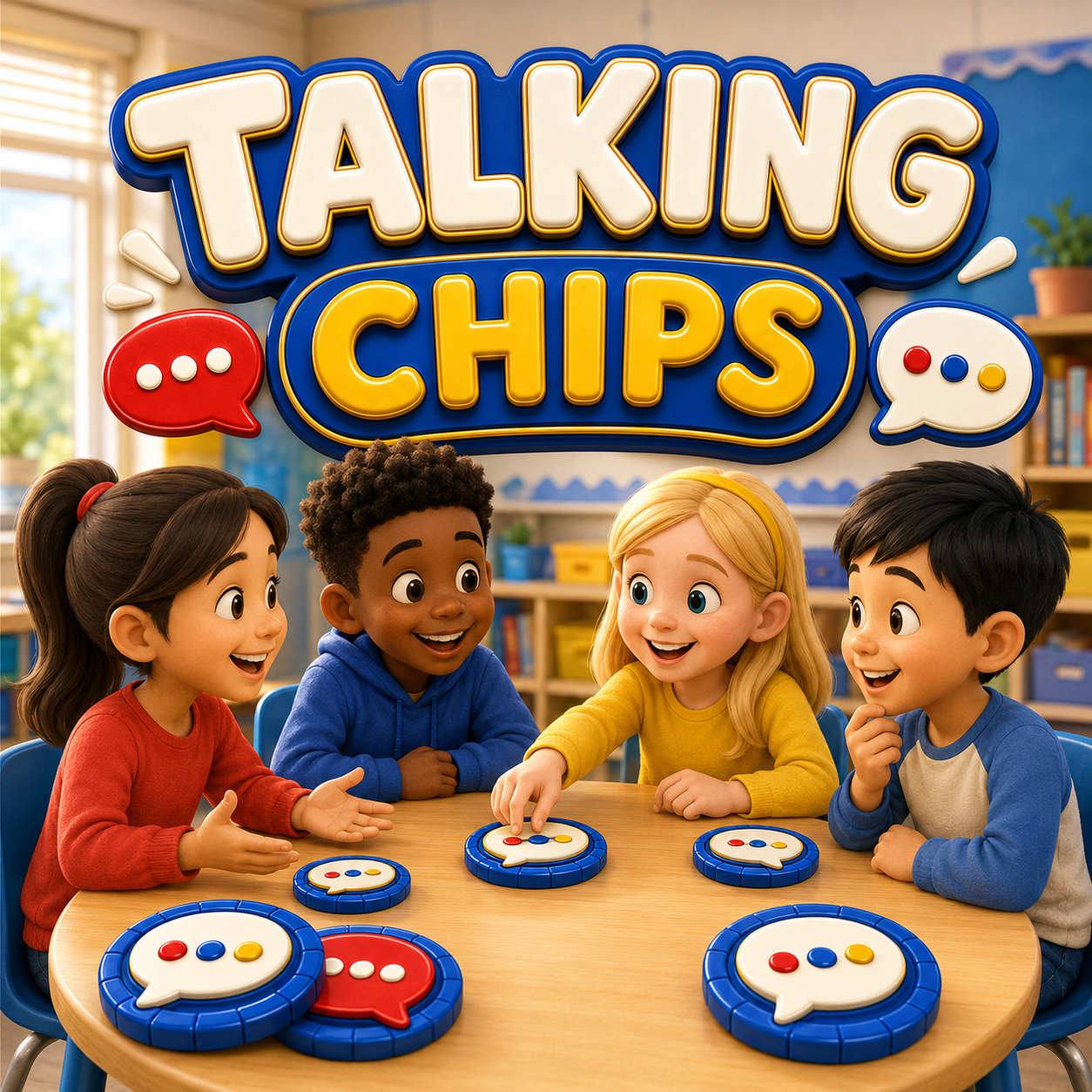
Turn everyday reading and language arts instruction into exciting opportunities for conversation, collaboration, and critical thinking with these 135 Reading & ELA Talking Chips!
Designed to encourage meaningful discussions about books, reading strategies, writing, vocabulary, and communication, these interactive Talking Chips help students develop essential literacy skills while building confidence in expressing their thoughts and ideas.
Whether students are discussing their favorite characters, exploring literary elements, analyzing informational texts, or practicing respectful communication, these versatile discussion prompts make reading and language arts more interactive, enjoyable, and engaging!
Perfect for morning meetings, literacy centers, reading groups, book clubs, classroom discussions, and cooperative learning activities, these Talking Chips help create a classroom environment where students are encouraged to think deeply, listen actively, and share their perspectives.
What's Included?
- 135 Reading & ELA Talking Chips featuring engaging literacy questions and conversation starters
- 30 printable PDF pages designed for double-sided printing
- 15 double-sided sheets when printed back-to-back
- 9 Talking Chips per sheet for easy cutting and classroom preparation
- Discussion prompts covering reading comprehension, literary elements, informational texts, writing, grammar, vocabulary, and speaking and listening skills
- Open-ended questions encouraging students to explain their thinking, make connections, and share personal perspectives
- Questions that support critical thinking, collaboration, and meaningful classroom discussions
- Printable PDF format for convenient classroom use
Easy Preparation: Print the 30-page PDF double-sided to create 15 sheets. Cut apart the nine Talking Chips on each sheet and laminate for a durable, reusable literacy discussion resource.
How Do Reading & ELA Talking Chips Work?
Talking Chips provide an interactive way for students to explore literacy concepts while developing communication and active listening skills.
Step 1: Pick a Chip
A student or teacher selects a Talking Chip featuring a reading, writing, vocabulary, or communication question.
Step 2: Think and Reflect
Give students a moment to consider the question, organize their ideas, or connect the prompt to something they have read or experienced.
Step 3: Share Your Thinking
Students take turns responding to the question, explaining their reasoning, giving examples, or sharing their experiences.
Step 4: Listen and Respond
Classmates practice active listening, asking respectful follow-up questions, and building upon one another's ideas.
Step 5: Make Literacy Connections
Encourage students to connect their discussions to classroom reading, independent books, writing assignments, or everyday communication.
Bonus Participation Strategy: Give students participation counters. Each time a student contributes to the discussion, they place one counter in the center. This encourages balanced participation and helps ensure that every student has an opportunity to share.
Reading & ELA Skills Covered
These Talking Chips explore a wide variety of literacy skills and language arts concepts, making them a valuable resource throughout the school year.
Reading Comprehension & Literary Elements
Encourage students to think deeply about stories and demonstrate their understanding of important literary concepts.
Topics include:
- Characters, setting, plot, and conflict
- Theme and author's purpose
- Character development and motivation
- Point of view and narration
- Predictions and story endings
- Literary genres and story structure
- Making connections to books and personal experiences
Informational Text & Nonfiction Reading
Help students develop the skills necessary to understand, analyze, and discuss informational texts.
Topics include:
- Main idea and supporting details
- Text features and text structures
- Fact versus opinion
- Cause and effect
- Comparing and contrasting information
- Primary and secondary sources
- Evaluating the reliability of information
- Summarizing nonfiction texts
Writing & the Writing Process
Encourage students to reflect on their writing habits, explore creative ideas, and strengthen written communication.
Topics include:
- Planning, drafting, revising, and editing
- Narrative and opinion writing
- Writing strong introductions and conclusions
- Dialogue and descriptive language
- Developing ideas and overcoming writer's block
- Writing for different purposes and audiences
Vocabulary & Word Study
Build language awareness and encourage students to explore how words work.
Topics include:
- Synonyms and antonyms
- Prefixes, suffixes, and root words
- Compound words and contractions
- Homophones and homographs
- Multiple-meaning words
- Context clues
- Literal and figurative language
Grammar & Language Conventions
Reinforce important conventions through student-friendly discussion prompts.
Topics include:
- Parts of speech
- Punctuation
- Sentence structure
- Fragments and run-on sentences
- Proper nouns and plural words
- Adjectives and adverbs
- Conjunctions and prepositions
Figurative Language & Poetry
Students explore creative language and how authors use words to make writing more interesting.
Topics include:
- Similes and metaphors
- Personification and hyperbole
- Alliteration and onomatopoeia
- Idioms
- Rhyme schemes
- Stanzas and poetry forms
- Haiku and poetic expression
Speaking, Listening & Communication
Build confident communicators who can express their ideas clearly and listen respectfully.
Topics include:
- Active listening
- Respectful disagreement
- Asking follow-up questions
- Paraphrasing and summarizing
- Public speaking and presentations
- Collaboration and group discussions
- Constructive feedback
- Body language and facial expressions
Books, Libraries & Reading Habits
Encourage a lifelong love of reading through conversations about books, personal preferences, and library skills.
Topics include:
- Favorite books, genres, and authors
- Choosing appropriate books
- Libraries and the Dewey Decimal System
- Book formats and features
- Graphic novels and e-books
- Reading habits and preferences
- Exploring different types of stories
Perfect for So Many Classroom Activities!
Morning Meetings: Begin the school day with engaging literacy conversations that build confidence and classroom community.
Literacy Centers & Stations: Create an interactive discussion station where students select Talking Chips and explore reading and language arts concepts together.
Guided Reading Groups: Encourage students to discuss literary elements, comprehension strategies, and connections to texts.
Book Clubs & Literature Circles: Provide engaging conversation starters that inspire students to share opinions and interpretations about books.
Think-Pair-Share: Allow students to reflect on a question, discuss it with a partner, and share their ideas with the class.
Whole-Class Discussions: Review literacy concepts and encourage meaningful participation during reading and ELA lessons.
Small-Group Instruction: Reinforce important skills while giving students opportunities to practice academic language and communication.
Reading Intervention & Enrichment: Select prompts appropriate for students' instructional levels and individual learning goals.
Speaking & Listening Practice: Help students develop confidence in expressing their ideas, asking questions, and responding respectfully to others.
Brain Breaks & Transitions: Turn a few spare minutes into valuable literacy discussions.
Early Finishers: Provide meaningful, engaging questions that encourage independent or collaborative thinking.
After-School Programs & Homeschool Learning: Make literacy discussions interactive and enjoyable in a variety of learning environments.
Why Teachers Will Love These Reading & ELA Talking Chips!
Encourages Every Student to Participate!
Talking Chips create opportunities for students to contribute to classroom discussions, helping quieter students find their voices while developing confidence in sharing their thoughts.
Strengthens Reading Comprehension!
Students practice analyzing characters, explaining story elements, making predictions, summarizing information, and thinking critically about what they read.
Builds Academic Vocabulary!
Regular discussions encourage students to use literacy terminology, explain concepts, and develop stronger language skills.
Supports Speaking & Listening Skills!
Students practice communicating clearly, listening respectfully, asking thoughtful questions, and responding to different perspectives.
Promotes Critical Thinking!
Questions encourage students to go beyond simple recall and explore ideas, make connections, explain their reasoning, and support their opinions.
Encourages a Love of Reading!
Students have opportunities to share favorite books, discuss interesting characters, explore genres, and celebrate their individual reading experiences.
Supports Differentiated Instruction!
Teachers can select questions based on student readiness, current literacy objectives, and individual learning needs.
Low-Prep and Reusable!
Print the pages back-to-back, cut out the chips, and laminate for a durable classroom resource that can be used throughout the school year.
Sample Reading & ELA Talking Chip Questions
Here are just a few examples of the engaging prompts included in this resource:
- "Who is your favorite character in the book you are reading?"
- "If you could change the ending of a story, what would happen?"
- "What is the 'setting' of a story and why does it matter?"
- "How can you tell if a story is fantasy or realistic fiction?"
- "How do you find the 'main idea' of a paragraph?"
- "What is the difference between a fact and an opinion?"
- "How do you use context clues to find the meaning of a hard word?"
- "What is the difference between editing and revising?"
- "How do you politely disagree with someone?"
- "How do you choose a 'just right' book?"
These questions encourage students to share their thinking, explain their understanding, and engage in meaningful conversations that build essential reading and communication skills.
Build a Classroom of Confident Readers, Writers & Communicators!
Literacy is about more than reading words on a page. It's about understanding ideas, making connections, exploring different perspectives, and communicating thoughts with confidence.
With 135 Reading & ELA Talking Chips, you'll have a versatile, ready-to-use resource that transforms ordinary classroom conversations into opportunities for deeper comprehension, vocabulary development, critical thinking, and collaboration.
Imagine a classroom where students eagerly discuss their favorite books, confidently explain literary concepts, ask thoughtful questions, and learn from one another's ideas.
These Talking Chips help create meaningful literacy experiences while encouraging students to become active readers, thoughtful writers, and confident communicators.
Pick a chip. Share your thoughts. Start a conversation. Inspire a lifelong love of literacy!
Add these Reading & ELA Talking Chips to your classroom toolkit and make meaningful literacy conversations a regular part of your teaching routine!
- Grades K-5
- Instant digital download
- Print & reuse in class