Spin the Deck – Grade 3 Amplify Science: Weather & Climate
$5.00
Spin the Deck – Grade 3 Amplify Science: Weather & Climate
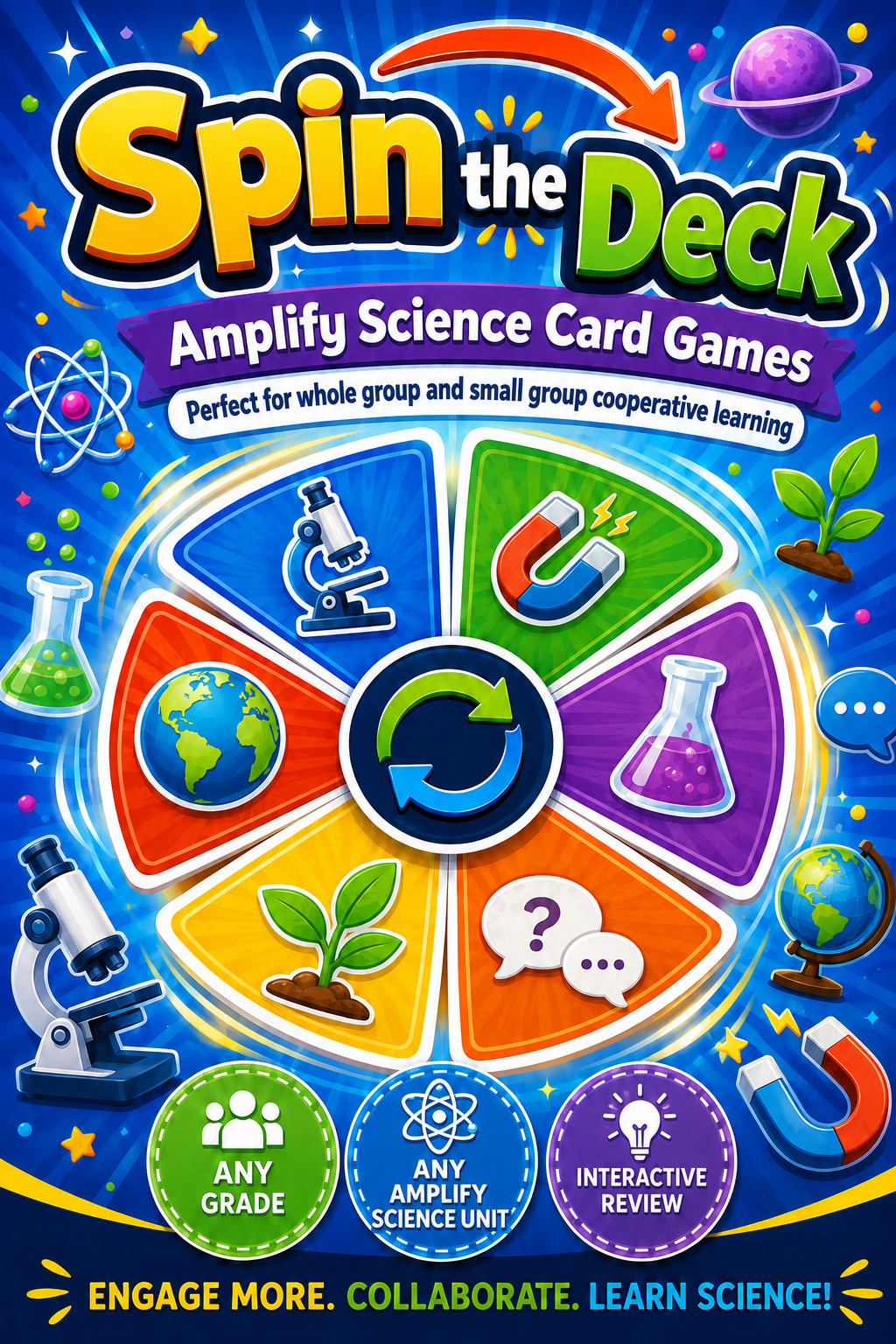
100 Interactive Science Review Cards | Cooperative Learning | Whole-Group & Small-Group Activities
SPIN THE DECK! ENGAGE MORE. COLLABORATE. LEARN SCIENCE!
Turn Weather and Climate Review into an Exciting Scientific Adventure!
Bring the fascinating world of weather, climate, and natural hazards into your classroom with Spin the Deck: Weather & Climate!
Designed to complement the Grade 3 Amplify Science Weather & Climate unit, this engaging collection of 100 multiple-choice science review cards helps students explore weather conditions, climate patterns, seasonal changes, weather instruments, extreme weather, and engineering solutions that protect communities from natural hazards.
What makes weather different from climate? How do scientists predict weather patterns? Why do some places experience hurricanes while others face blizzards or droughts? How can engineers design buildings that withstand extreme weather?
With Spin the Deck, students investigate these important questions while building science vocabulary, strengthening critical thinking, and participating in meaningful cooperative learning activities.
Move beyond traditional worksheets and transform your classroom into a collaborative science learning environment where students answer questions, discuss evidence, explain scientific ideas, and develop confidence in their understanding.
Perfect for whole-group review, small-group cooperative learning, science centers, partner activities, intervention, enrichment, and assessment preparation, this versatile resource makes learning about Earth's weather and climate engaging, interactive, and memorable!
What's Included?
- 100 numbered multiple-choice science review cards covering Grade 3 Weather & Climate concepts
- Four answer choices per question to promote careful reading and scientific thinking
- Answers printed on the reverse side for immediate feedback and self-checking
- 50 printable PDF pages designed for double-sided printing
- 25 double-sided sheets when printed back-to-back
- Four cards per sheet, creating 100 double-sided science review cards
- Colorful science-themed designs featuring laboratory equipment and scientific imagery
- Questions exploring weather patterns, climate regions, precipitation, weather instruments, natural hazards, and engineering solutions
- Reusable review cards for multiple cooperative learning activities and classroom games
Easy Preparation: Print the PDF double-sided, cut apart the four cards on each sheet, and laminate for durability. Your interactive science review deck is ready to use!
Science Concepts & Skills Covered
Weather vs. Climate
Help students understand the important differences between daily weather conditions and long-term climate patterns.
Topics include:
- Defining weather
- Defining climate
- Short-term weather conditions
- Long-term weather patterns
- Comparing weather and climate
- Weather observations
- Climate scientists and meteorologists
- Identifying patterns in weather data
Students build a foundational understanding of how weather changes from day to day while climate describes patterns observed over longer periods.
Weather Instruments & Measurement
Explore the tools scientists use to observe, measure, and describe weather conditions.
Topics include:
- Thermometers and temperature
- Anemometers and wind speed
- Wind vanes and wind direction
- Rain gauges and precipitation
- Barometers and air pressure
- Humidity
- Weather satellites
- Collecting and interpreting weather measurements
These questions help students connect scientific instruments to the weather information they provide.
Climate Regions & Seasonal Patterns
Investigate how climate varies across different parts of Earth and how seasonal patterns affect temperature, precipitation, and living things.
Topics include:
- Tropical climates
- Polar climates
- Desert climates
- Temperate climates
- Seasonal changes
- Annual weather patterns
- Differences in daylight
- Earth's equator
- Temperature changes with elevation
- The influence of nearby water on climate
- Microclimates
Students explore why different regions experience different climate conditions and how scientists recognize recurring seasonal patterns.
Precipitation, Clouds & the Water Cycle
Reinforce essential vocabulary and processes involving water in Earth's atmosphere.
Topics include:
- Rain
- Snow
- Sleet
- Hail
- Precipitation
- Clouds
- Fog
- Overcast skies
- Evaporation
- Condensation
- The water cycle
- Water vapor and humidity
Students review how water moves through the environment and contributes to changing weather conditions.
Extreme Weather & Natural Hazards
Help students recognize different types of hazardous weather and understand how these events affect communities.
Topics include:
- Hurricanes
- Tornadoes
- Thunderstorms
- Lightning and thunder
- Blizzards
- Floods
- Droughts
- Severe weather
- Weather hazards
- Visibility and whiteout conditions
- Hurricane formation
- Tornado Alley
- Weather-related risks
These questions encourage students to identify extreme weather events and understand the importance of preparation and safety.
Engineering Solutions & Weather Safety
Connect science concepts to real-world engineering challenges as students investigate ways people reduce the impact of weather-related hazards.
Topics include:
- Weather-resistant buildings
- Protecting structures from storms
- Sloped roofs in snowy climates
- Lightning rods
- Flood-prevention levees
- Hazard mitigation
- Evacuation
- Reducing weather-related damage
- Designing solutions for environmental conditions
Students discover how engineers use scientific knowledge to create solutions that help protect people, buildings, and communities.
Weather Data, Patterns & Scientific Reasoning
Strengthen the scientific investigation skills students need to analyze information and explain their conclusions.
Topics include:
- Weather observations
- Collecting data
- Analyzing weather information
- Recognizing patterns
- Interpreting line graphs
- Temperature ranges
- Average temperatures
- Making predictions
- Developing scientific claims
- Supporting claims with evidence
- Using models
- Collaborating with other scientists
These questions reinforce the importance of using observations and data to understand weather and climate.
Perfect for Whole-Group & Small-Group Cooperative Learning!
Whole-Group Interactive Science Review
Bring students together to answer questions, compare responses, and discuss the scientific reasoning behind each answer.
Fan-N-Pick
Students work in cooperative groups, taking turns selecting cards, reading questions, answering, and checking responses. This activity promotes active listening, participation, and teamwork.
Quiz-Quiz-Trade
Students pair up, quiz one another, check answers, exchange cards, and find new partners. This movement-based activity provides repeated opportunities to practice essential science concepts.
Science Centers & Stations
Create independent or collaborative review stations where students explore weather vocabulary, climate patterns, weather instruments, and natural hazards.
Partner Review
Students take turns reading questions, selecting answers, and explaining their reasoning before checking the answer on the reverse side.
Small-Group Science Challenges
Organize students into teams to discuss questions, defend their answers, and develop a deeper understanding of weather and climate.
Spin & Answer Review Games
Combine the cards with a classroom spinner or teacher-created game structure to make review sessions even more exciting.
Science Test Preparation
Help students revisit important vocabulary, scientific concepts, and weather-related investigations before unit assessments.
Warm-Ups & Exit Tickets
Select a few cards to activate prior knowledge, spark discussions, or check student understanding at the end of a lesson.
Science Intervention & Enrichment
Target specific weather and climate concepts for additional practice or encourage advanced learners to explain the scientific reasoning behind their answers.
Early Finishers & Substitute Plans
Provide meaningful, low-preparation science activities that keep students engaged and learning.
Why Teachers Will Love Spin the Deck!
Low-Prep and Ready to Use!
Simply print, cut, and laminate to create a reusable science review resource.
Designed for Cooperative Learning!
Encourage students to communicate, collaborate, listen respectfully, and participate in meaningful scientific discussions.
Promotes Active Student Engagement!
Turn traditional science review into an interactive experience involving discussion, movement, teamwork, and problem-solving.
Reinforces Amplify Science Concepts!
Review essential vocabulary and scientific ideas connected to the Grade 3 Weather & Climate unit.
Builds Scientific Reasoning!
Students strengthen their ability to identify weather patterns, analyze data, make predictions, and explain how engineering solutions reduce weather-related hazards.
Provides Immediate Feedback!
Answers on the reverse side allow students to check their understanding during independent, partner, and group activities.
Supports Differentiated Instruction!
Select questions based on student readiness, target specific concepts, or extend discussions with additional scientific reasoning challenges.
Connects Learning to Real-World Science!
Examples involving hurricanes, tornadoes, climate regions, weather instruments, and weather-resistant buildings help students recognize how science influences everyday life.
Reusable Year After Year!
Laminate the cards for a durable classroom resource that supports repeated review and cooperative learning.
Sample Spin the Deck Questions
Here are examples of questions included in this collection:
Question 1: What is "weather"?
Answer: Conditions at a specific time.
Question 2: What is "climate"?
Answer: Long-term weather patterns.
Question 4: Which tool measures wind speed?
Answer: Anemometer.
Question 8: What is a "seasonal pattern"?
Answer: Weather that repeats every year.
Question 13: Which climate is usually hot and rainy all year?
Answer: Tropical.
Question 17: Extreme weather is weather that is:
Answer: Severe or unusual.
Question 22: Why do engineers design "weather-resistant" buildings?
Answer: To reduce damage from hazards.
Question 28: Why is it important to look at many years of data?
Answer: To find a pattern.
Question 38: What is the center of a hurricane called?
Answer: The eye.
Question 40: To "mitigate" a hazard means to:
Answer: Make it less severe.
Question 47: "Levees" are walls built to prevent:
Answer: Flooding.
Question 54: To "evacuate" means to:
Answer: Move to a safe place.
These questions reinforce important scientific vocabulary while encouraging students to recognize weather patterns, explain climate conditions, and connect scientific knowledge to real-world challenges.
Make Weather & Climate Review an Adventure in Discovery!
Weather and climate affect nearly every aspect of our lives, from the clothes we wear to the buildings we construct and the ways communities prepare for natural hazards.
With 100 Spin the Deck Weather & Climate review cards, students can explore the science behind changing weather conditions, discover patterns in Earth's climate, investigate extreme weather events, and learn how engineers design solutions to protect communities.
Imagine students enthusiastically selecting cards, discussing why hurricanes form over warm oceans, explaining how weather instruments work, and collaborating to identify ways to reduce damage from natural hazards.
Whether you're reviewing lessons, preparing for assessments, reinforcing vocabulary, or building collaborative learning opportunities, Spin the Deck helps transform science review into an engaging classroom experience.
One deck. 100 questions. Multiple ways to learn!
SPIN THE DECK! ENGAGE MORE. COLLABORATE. LEARN SCIENCE!
Add Spin the Deck: Weather & Climate to your classroom toolkit and inspire confident, curious, and collaborative young scientists!
Important Curriculum Disclaimer
This independently created resource is designed to supplement the Amplify Science curriculum. It is not affiliated with, sponsored by, authorized by, or endorsed by Amplify Education, Inc. Amplify and Amplify Science are trademarks of their respective owner. No affiliation or endorsement is implied.
This product is a supplemental classroom review activity and is not a replacement for official Amplify Science curriculum materials, lessons, assessments, or instructional resources.
- Grade 3
- Instant digital download
- Print & reuse in class